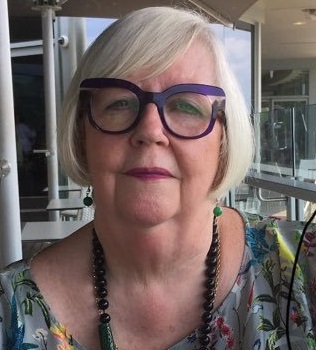
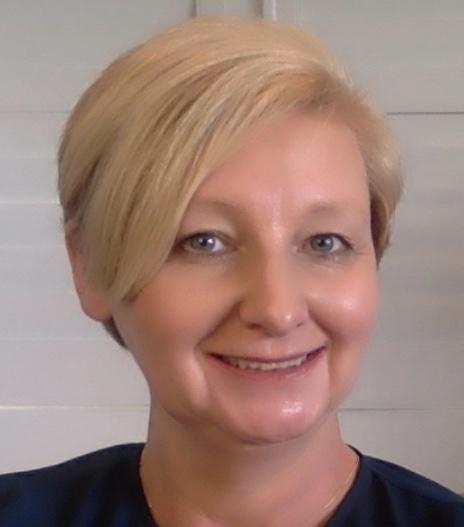
In this inspiring new CPL course participants will hear about the professional journey (highs and tribulations) of a number of current and former female leaders and colleagues in our profession. Participants will have the opportunity to explore a lens for their own career paths (through networking, collaborations, shared experiences and questions).
Host presenter Lila Mularczyk will take you through the issues, circumstances, contexts and initiatives that have framed the path of many female education leaders in our system.
Case studies will be delivered by the leaders as they live(d) their work life. This will include system and school contexts that influence career passage.
Primary, Secondary and TAFE teachers and leaders are encouraged to apply to attend this course.
Participants will have the opportunity to listen, interact with leading female colleagues, network and consider further professional career options now and into the future.
Wednesday 29 April 2026, Surry Hills
All CPL courses run from 9am to 3pm.
$220
Please note, payment for courses is taken after the course takes place.
Lila Mularczyk
Lila Mularczyk’s commitment to education was recognised by being honoured with the Order of Australia Medal (OAM). Lila has been contributing to public education for 40 years. She currently is undertaking a portfolio of work including leading or participating on multiple National and State Education Boards and Reference Groups and projects (including, PEF, ACE, UTS, UNSW, NSWTF and CPL.) tertiary professional experience officer, coach and mentor, UNSW Gonski Institute, State and Vice Chair ACE, supporting HALT’s, tertiary lecturer, work in and for schools, research, contract work, critical friend, innovation projects etc.
Prior, Lila was the Director, Secondary Education, at the Department of Education. Immediately prior to this, Lila was President of the NSW Secondary Principals’ Council (SPC) from 2012 to 2016. As President and as a school Principal, Lila represented Public Education around Australia, and frequently globally, at conferences over many years. Lila was Principal at Merrylands High School for 15 years until 2016.
The focus of this one day course presented by Kathy Rushton and Joanne Rossbridge is to develop understandings and strategies for engaging secondary students in writing.
Participants will:
Develop strategies for teaching writing as the context in which grammar is taught.
Identify the language demands of texts commonly read and written in secondary schools.
Explore the differentiation between oral and written language and the grammatical features which identify each mode.
Develop deep understanding of a model of language and scaffolding, and practical strategies to explicitly teach relevant aspects of language across subjects.
Will focus on the teaching of writing as the context in which grammar is taught to support meaning
Be supported to recognise and analyse their students’ written work.
13 March 2026 – NSW Teachers Federation, Surry Hills
22 May 2026 – Wagga Wagga RSL
14 August 2026 – NSW Teachers Federation, Surry Hills
All CPL courses run from 9am to 3pm.
$220 for one day
Please note, payment for courses is taken after the course takes place.
Secondary teachers especially teachers of all subjects requiring extended response writing such as HSIE, English, PDHPE and Science.
Teacher Librarians
Joanne Rossbridge is an independent language and literacy consultant working in both primary and secondary schools and with teachers across Australia. She has worked as a classroom teacher and literacy consultant with the DET (NSW). Her expertise and much of her experience is in working with students from diverse linguistic and cultural backgrounds. Joanne is particularly interested in student and teacher talk and how talk about language can assist the development of language and literacy.
Kathy Rushton is interested in the development of language and literacy especially in disadvantaged communities. She has worked as a classroom teacher and literacy consultant and provides professional learning for teachers in the areas of language and literacy development. Her current research projects include a study of multilingual pre-service teachers and the impact that teacher professional learning has on the development of a creative pedagogical stance which supports translanguaging and student identity and wellbeing.
Completing Conversations about Texts in Secondary Schools will contribute 5 hours of NSW Education Standards Authority (NESA) Accredited PD in the priority area of Delivery and assessment of NSW Curriculum/Early Years Learning Framework addressing Standard Descriptors 2.5.2 & 3.3.2 from the Australian Professional Standards for Teachers towards maintaining Proficient Teacher in NSW.
In this exciting new CPL course participants will delve into women in history, investigating programming approaches for History 7-10, History Elective years 9 and 10 as well as Extension History Year 12.
Utilising history case studies of both the well-known and forgotten women of history, participants will explore thematic, comparative and biographical event-based programming approaches, taking in key historical debates and the big questions in history.
Primary, Secondary and TAFE teachers are encouraged to apply to attend this course.
Presenter Judy King will take participants through planning units of work in History 7-10, History Elective years 9 and 10 and Extension History Year 12, including perspectives on women’s history in a variety of topics.
As well, participants will be given an overview of the Australian Research Council (ARC) international digital history project Conviction Politics.
If you are interested in this course, you may also be interested in a connected social event. Meet History’s (In)Visible Women over a drink and snack, is designed to complement the course and offers a relaxed social setting for those interested in women’s history and activism.
Friday 31 July2026
NSW Teachers Federation, Surry Hills
All CPL courses run from 9am to 3pm.
Judy King
Judy King is a former high school principal and a Life Member of the NSW Teachers Federation, the Australian Education Union and Secondary Principals’ Council. She retired from Riverside Girls High School in 2010 after 19 years as a secondary principal.
Since retirement Judy has worked part time at Chifley College Mt Druitt campus, Northmead High and Georges River College in an executive support role with a strong focus on teaching and learning, assessment and reporting, especially in the areas of reading for meaning and writing for purpose.
She currently teaches History and Politics at WEA , the oldest adult education foundation in the CBD of Sydney.
Judy represented secondary principals on the Board of Studies (now NESA) from 1998-2004 and was History Inspector at the Board in 1991. Judy was deputy president of the SPC from 1998-2006.
In 2018 she researched and wrote a history of the NSW Teachers Federation 1918-2018 as part of its centenary celebrations. The articles were published throughout each edition of Education in 2018 and were featured as part of a three week exhibition in the Federation building.
In 2007 Judy was awarded the Meritorious Service in Public Education medal by the Department of Education.
Judy has an abiding interest in all aspects of Ancient, Mediaeval and Modern History as well as archaeology, politics and film. In 2014 and 2019 she attended the Cambridge University History Summer School for international students and hopes to return in 2025.
In 2024, Judy was awarded an OAM for “services to secondary education.”
Jen Sonter
Jen Sonter began teaching in 2016 around the Central Coast, eventually landing at Terrigal High School in 2018. She has since been working full time at Pittwater High School on the Northern Beaches of Sydney, finally achieving permanent employment there in 2022.
She has predominantly worked in mainstream classroom settings throughout this time, but has also worked in wellbeing roles such as Year Advisor.
She is a passionate history teacher and takes up any opportunity to travel and experience historical sites from far and wide. She brings this passion into the classroom in the hopes of passing it on to her students.
Emma Seabrook
Emma Seabrook began teaching in 1992 at Crestwood High School in Sydney’s Northwest. Her first permanent position, in 1995, was at Cambridge Park High School in the Western suburbs.
She has worked in public education her whole career and is currently teaching History and Society and Culture at Winmalee High School, in the Blue Mountains. As well as teaching History through all stages, Emma’ focus is on student well-being and has her career has included various stints as Year Advisor.
$220 for one day
Please note, payment for courses is taken after the course takes place.
“Excellent resources provided by all speakers.”
“Judy’s session was very thought provoking and a great way to start. Very inspirational woman.”
“All presenters were engaging and informative. I appreciate their generosity in sharing.”
“Very valuable course. (I have) new ideas to take back to school.”
“Thank you Federation and the CPL team for providing another extremely useful PD. All PD by the CPL has presenters who are genuine experts in their fields and provide useful resources and knowledge.”
The focus of this one day course presented by Kathy Rushton and Joanne Rossbridge is to develop understandings and strategies for participants who support EAL/D students in both small groups and mainstream classrooms.
Practical strategies will be provided to foster the use of English language while encouraging students to use all the linguistic resources that they bring to school, including the use of their first language. Consideration will be given to the wellbeing framework and supporting students in an inclusive environment which honours and confirms their identity, language, and culture.
Participants will:
Extend their knowledge, skills and understanding in the development of oral language with links to the mode continuum to support English as an Additional Language or Dialect (EAL/D) students.
Explore the relationship between spoken and written language through unpacking lexical density and grammatical intricacy
Engage in activities to expand their strategies to develop a reading sequence with consideration of Field, Tenor and Mode, vocabulary and language features
Engage in activities showcasing strategies in developing a ‘tanslanguaging space’ to support literacy.
Extend their understanding on the role of joint construction in the teaching and learning cycle.
4 September 2026 at NSW Teachers Federation, Surry Hills
All CPL courses run from 9am to 3pm.
$220
Please note, payment for courses is taken after the course takes place.
Joanne Rossbridge is an independent language and literacy consultant working in both primary and secondary schools and with teachers across Australia. She has worked as a classroom teacher and literacy consultant with the DET (NSW). Her expertise and much of her experience is in working with students from diverse linguistic and cultural backgrounds. Joanne is particularly interested in student and teacher talk and how talk about language can assist the development of language and literacy.
Kathy Rushton is interested in the development of language and literacy especially in disadvantaged communities. She has worked as a classroom teacher and literacy consultant and provides professional learning for teachers in the areas of language and literacy development. Her current research projects include a study of multilingual pre-service teachers and the impact that teacher professional learning has on the development of a creative pedagogical stance which supports translanguaging and student identity and wellbeing.
Primary and Secondary teachers who support EAL/D students in both small groups and mainstream classrooms.
The Supporting Students with ADHD in 7-10 course is designed to support teachers to:
develop an understanding of the wide range of characteristics of students with Attention Deficit Hyperactivity Disorder (ADHD);
explore a range of strategies which address the needs of students with ADHD in the areas of language and cognitive development, communication skills and social behaviour;
develop specific strategies to help students with ADHD access the curriculum, and
develop an understanding for the need for explicit instruction in the essential components of literacy in every classroom every day.
Monday 23 March 2026, Online via Zoom
Wednesday 24 June 2026, Surry Hills
All CPL courses run from 9am to 3pm.
Dr Roselyn Dixon has been a special education teacher in both mainstream and special education settings in primary and secondary schools. Rose has been in academia and involved with Inclusive Education for more than 25 years. She has published research in the fields of social skills and behavioural interventions for people with a range of disabilities including students with Oppositional Defiance Disorders and Autism.
She has been actively involved in examining the relationship between digital technologies and pedagogy in special education and inclusive classrooms for students with Autism as well as the implications of the NDIS on people with disabilities in rural and remote communities. Rose is an Honorary Associate Professor at the School of Education, University of Wollongong, where she was previously the Academic Director of Inclusive and Special Education. She continues to support doctoral students in Inclusive and Special education with a focus on Autism.
Secondary Teachers
Special Education Teachers
School Counsellors
Learning and Support Teachers
$220 (Federation members only)
Please note, payment for courses is taken after the course takes place.
The Supporting Students with ADHD in K-6 course is designed to support teachers to:
develop an understanding of the wide range of characteristics of students with Attention Deficit Hyperactivity Disorder (ADHD);
explore a range of strategies which address the needs of students with ADHD in the areas of language and cognitive development, communication skills and social behaviour;
develop specific strategies to help students with ADHD access the curriculum, and
develop an understanding for the need for explicit instruction in the essential components of literacy in every classroom every day.
Friday 20 February 2026, online via Zoom
Wednesday 28 October 2026, Surry Hills
Wednesday 18 November 2026, online via Zoom
All CPL courses run from 9am to 3pm.
Dr Rose Dixon
Dr Roselyn Dixon has been a special education teacher in both mainstream and special education settings in primary and secondary schools. Rose has been in academia and involved with Inclusive Education for more than 25 years. She has published research in the fields of social skills and behavioural interventions for people with a range of disabilities including students with Oppositional Defiance Disorders and Autism.
She has been actively involved in examining the relationship between digital technologies and pedagogy in special education and inclusive classrooms for students with Autism as well as the implications of the NDIS on people with disabilities in rural and remote communities. Rose is an Honorary Associate Professor at the School of Education, University of Wollongong, where she was previously the Academic Director of Inclusive and Special Education. She continues to support doctoral students in Inclusive and Special education with a focus on Autism.
Primary teachers
Special Education teachers
School Counsellors
Learning and Support Teachers
$220 (Federation members only)
Please note, payment for courses is taken after the course takes place.
What do data and evidence mean for you, your school, and your students? What does it mean to be data literate? What does evidence-based decision-making look like in the school context? Making meaningful use of data and evidence empowers the teacher to make informed decisions about their students’ progress based on professional judgement.
This course looks closely into different definitions of data and evidence, the different types of data that are available to teachers on a day-to-day basis, evidence-based decision making, uses and purposes of data, and how to make data fit for purpose.
Professor Jim Tognolini from the University of Sydney’s Centre for Educational Measurement and Assessment will lead an interactive and content driven professional learning day. Completing this course will give you a voice in the narrative around the purposes of data and evidence in classrooms and schools.
Please note, this course was previously called Empowering Teachers Through the Meaningful Use of Data and Evidence.
17 March 2026, at NSW Teachers Federation, Surry Hills.
2 September 2026 in Blacktown
All CPL courses run from 9am to 3pm.
Prof Jim Tognolini
Professor Jim Tognolini is Director of The Centre for Educational Measurement and Assessment (CEMA) which is situated within the University of Sydney School of Education and Social Work. The work of the Centre is focused on the broad areas of teaching, research, consulting and professional learning for teachers.
The Centre is currently providing consultancy support to a number of schools. These projects include developing a methodology for measuring creativity; measuring 21st Century Skills; developing school-wide practice in formative assessment. We have a number of experts in the field: most notably, Professor Jim Tognolini, who in addition to conducting research offers practical and school-focused support.
Sofia Kesidou
Sofia Kesidou is an Associate Professor at the Centre for Educational Measurement and Assessment at the University of Sydney. Her research interests include teachers’ use of assessment; professional learning to improve teachers’ assessment knowledge and practice; assessment validation and measurement of educational constructs. Sofia was a key contributor to the development and implementation of national science, mathematics and technology standards in the United States, where she developed award-winning research-based processes for curriculum and assessment evaluation. She has held senior executive roles at the University of New South Wales and the NSW Education Standards Authority (NESA), where she oversaw the development of numerous Australian and international high-stakes assessment programs, including the National Assessment Program for Science Literacy and the Higher School Certificate Examinations (HSC), as well as state curriculum reform programs. She has served on the Board of the Australian Curriculum, Assessment and Reporting Authority, the Australian Music Examinations Board, and the National Assessment Online Steering Committee. She is currently a member of the NSW HSC Standards Setting Committee.
Completing Empowering Teachers Through the Meaningful Use of Data and Evidence: K-12 will contribute 5 hours of NSW Education Standards Authority (NESA) Accredited PD in the priority area of Delivery and Assessment of NSW Curriculum/EYLF addressing standard descriptors 5.4.2 from the Australian professional Standards for Teachers towards maintaining Proficient Teacher Accreditation in NSW.
$220 for one day
Please note, payment for courses is taken after the course takes place.
“Every aspect of this course was informative and useful. I’ve had an opportunity to think about what has been presented and engage in collegial discussion.”
“I feel empowered to challenge the idea of data and evidence within my workplace and provide a different point of view that values teachers as professionals. Engaging and thought-provoking presentation”
“It was an extremely valuable PL which I will absolutely be recommending to others.”
“Jim’s passion and knowledge were very obvious and appreciated.”
The focus of this three-day course presented by Kathy Rushton and Joanne Rossbridge is supporting participants to identify the language demands of texts commonly read and written in the secondary school and recognising the features of their students’ writing.
We will focus on the teaching of writing as the context in which grammar is taught to support meaning and we will outline those grammatical features which best support teachers to make an impact on students who are writing extended responses.
Our aim is not to focus on the basics, but we will briefly review or address grammar for those who may be addressing it explicitly for the first time. This will support participants to identify and address their students’ needs as they analyse their written work. We will provide practical examples of strategies for engaging students in writing and supporting students to write effectively.
Sydney
Day 1 – Friday 12 June 2026
Day 2 – Friday 26 June 2026
Day 3 – Friday 31 July 2026
Federation House
23-33 Mary St, Surry Hills, NSW 2010
Day 1 – Language and Literacy
Talking and Listening – What’s the difference?(Grammatical intricacy and lexical density)
Reading – What’s going on? (The verbal group)
Overview of sessions.
Discussion of Assessment tasks.
Introduction of field, tenor and mode:
Mode continuum.
Types of verbs and aspects of verbal groups identified and discussed.
The importance of teacher identification of verbal groups for exploring clause patterns in texts students are both reading and writing.
Whole group trials and share strategies for supporting students to explore verbal groups
Day 2 – Language Choices
Theme(Marked)
Reading – Who and What?(The noun group)
Writing – Where? When? How? (Adverbials and Theme)
Aspects of the extended noun group explained as well as the use of noun groups in developing lexically dense texts.
Analysis of texts suitable for all stages. Discussion at clause and group levels building on knowledge of the verb group to introduce the concept of marked theme of clause realised as an adverbial phrase of time, place or manner.
Analysis of texts and strategies for teaching adverbial phrases and their use in thematic position across the stages of texts.
Sharing of scaffolds.
Day 3 – Creating Cohesive texts
Sentence structure
The third voice in your classroom – Using quality texts.(Nominalisation)
Identifying the role of nominalisation and active and passive voice in quality texts and how they are used to develop theme across the stages of texts.
Identifying strategies for developing writing through a joint construction.
Sharing of notes for a joint construction.
Please note each day is accredited separately
Day 1 Accreditation
Completing Writing in Secondary Schools – understanding and applying grammar in context (Language and Literacy) will contribute 5 hours of NSW Education Standards Authority (NESA) Accredited PD in the priority area of Delivery and Assessment of NSW Curriculum/EYLF addressing Standard Descriptor(s) 2.5.2 and 3.5.2 from the Australian Professional Standards for Teachers towards maintaining Proficient Teacher Accreditation in NSW.
Day 2 Accreditation
Completing Writing in Secondary Schools – understanding and applying grammar in context (Language choices) will contribute 5 hours of NSW Education Standards Authority (NESA) Accredited PD in the priority area of Delivery and Assessment of NSW Curriculum/EYLF addressing Standard Descriptor(s) 2.5.2 and 3.3.2 from the Australian Professional Standards for Teachers towards maintaining Proficient Teacher Accreditation in NSW.
Day 3 Accreditation
Completing Writing in Secondary Schools – understanding and applying grammar in context (creating cohesive texts) will contribute 5 hours of NSW Education Standards Authority (NESA) Accredited PD in the priority area of Delivery and Assessment of NSW Curriculum/EYLF addressing Standard Descriptor(s) 2.5.2, 3.3.2 from the Australian Professional Standards for Teachers towards maintaining Proficient Teacher Accreditation in NSW.
“The course delivered by Jo and Kathy has been nothing short of positive and eye-opening. As a science teacher, I struggled to find why it is my role to teach literacy but that was only out of fear as I didn’t have much knowledge on language. This course not only expanded my knowledge but bolstered my confidence in implementing new strategies in the classroom. The course provided a clear understanding of literacy, allowing me to see the connections and applications of these concepts in a way that can resonate with my students. The experience I had implementing a joint construction has led to a boost in my self-efficacy. Overall, the professional learning course has been beneficial for me. It has provided me with tools and resources to enhance my teaching and better support my students on their learning journey. Thank you for the opportunity and experience.”
“Best PL I have done.”
“Presenters were highly engaging, approachable and demonstrated exceptional knowledge and pedagogical practice.”
“This course was extremely interesting and gave me many ideas for my own teaching – and my own learning.”
“This course was fantastic! Essential learning for all teachers! Thank you!”
“Thank you for the amazing and useful sessions! I feel more confident about grammar now.’
“I enjoyed the structure and engaging with colleagues regarding the strategies we started implementing into our classes.”
Kathy Rushton
Kathy Rushton is interested in the development of language and literacy especially in disadvantaged communities. She has worked as a classroom teacher and literacy consultant and provides professional learning for teachers in the areas of language and literacy development. Her current research projects include a study of multilingual pre-service teachers and the impact that teacher professional learning has on the development of a creative pedagogical stance which supports translanguaging and student identity and wellbeing.
Joanne Rossbridge
Joanne Rossbridge is an independent language and literacy consultant working in both primary and secondary schools and with teachers across Australia. She has worked as a classroom teacher and literacy consultant with the DET (NSW). Her expertise and much of her experience is in working with students from diverse linguistic and cultural backgrounds. Joanne is particularly interested in student and teacher talk and how talk about language can assist the development of language and literacy.
Secondary teachers especially teachers of all subjects requiring extended response writing such as HSIE, English, PDHPE and Science.
Teacher Librarians
$660 for three days
Three whole-day workshops with participants actively engaged in each session and undertaking pre-course and in-between course readings.
We will focus on oral language development as the basis for developing literacy through the cyclical use of a range of strategies. This will be achieved through consideration of how students need to make meaning in curriculum contexts with a particular emphasis on developing knowledge about language, particularly grammar and vocabulary.
The focus of this three day course presented by Kathy Rushton and Joanne Rossbridge is to develop understandings and strategies for participants who support EAL/D students in both small groups and mainstream classrooms.
Practical strategies will be provided to foster the use of English Language (L2) while encouraging students to use all the linguistic resources that they bring to school, including the use of their first language (L1). Consideration will be given to the wellbeing framework and supporting students in an inclusive environment which honours and confirms their identity, language, and culture.
Open All
Day 1 – Friday 24 July 2026
Day 2 – Friday 7 August 2026
Day 3 – Friday 21 August 2026
At NSW Teachers Federation, Surry Hills
All CPL courses run from 9am to 3pm.
Day 1 – Speaking and Listening
Principles of second language learning
Lexical density and grammatical intricacy: The relationship between grammar and vocabulary development
The Mode Continuum
Elaborated and restricted codes and the relationship between L1 and L2
Strategies for developing oral language through planning and the cyclical use of range of activities, e.g. communicative activities, group work, drama, rhymes, chants, poems. Link back to the mode continuum.
Select a picture book and, based on today’s session, prepare strategies. Explanation of task for Session 2.
Day 2 – Reading
Introduction of Field, Tenor and Mode.
Before, during and after reading and in preparation for writing with a focus on: – field building activities to acknowledge and build on cultural knowledge (before) – intonation, pronunciation, punctuation and spelling (during) – inferential comprehension (after)
Strategies for categorising vocabulary and working with language features
Share strategies for selected picture book with a small group
Explanation of task for Session 3.
Day 3 – Writing
The teaching and learning cycle
Identifying strategies for developing writing through a joint construction.
Strategies for supporting written like text, eg Readers Theatre, Dictogloss, Running dictation, Advance /Detail
Making links to the community through writing for a purpose
Prepare notes for the joint construction of a Literary Recount and an Exposition using selected text.
Joanne Rossbridge
Joanne Rossbridge is an independent language and literacy consultant working in both primary and secondary schools and with teachers across Australia. She has worked as a classroom teacher and literacy consultant with the DET (NSW). Her expertise and much of her experience is in working with students from diverse linguistic and cultural backgrounds. Joanne is particularly interested in student and teacher talk and how talk about language can assist the development of language and literacy.
Kathy Rushton
Kathy Rushton is interested in the development of language and literacy especially in disadvantaged communities. She has worked as a classroom teacher and literacy consultant and provides professional learning for teachers in the areas of language and literacy development. Her current research projects include a study of multilingual pre-service teachers and the impact that teacher professional learning has on the development of a creative pedagogical stance which supports translanguaging and student identity and wellbeing.
Primary and Secondary teachers who support EAL/D students in both small groups and mainstream classrooms.
$660 for 3 days
Please note, payment for courses is taken after the course takes place.
Three whole day workshops with participants actively engaged in each session and undertaking reading and assignments between sessions.
“Perfect balance of theory vs practical strategies. The theories and strategies will be impossible to forget – putting it into practice between session was great.”
“Loved the depth of knowledge on all aspects of literacy in the context of EAL/D learners.”
“So glad I attended – have learnt so much and feel inspired to share what I have learnt.”
“Presenters are absolutely fabulous! The perfect amount of banter and professionalism. They are experts in their field, and it shows. They invite the learner in – whatever level of knowledge they are coming with.”
JPL Articles
Critical Literacy in English and History: Stages 3 & 4
The CPL and The University of Sydney’s Centre for Educational Measurement and Assessment (CEMA) have entered into a collaborative partnership to deliver professional learning Literacy modules for all K-12 teachers.
About the Assessment Literacy modules
The six modules include video presentations by Professor Jim Tognolini, downloadable PDF files, formative self-assessment, reflective questions, recommended short readings, and collaborative webinar opportunities.
Each module will take you between four and six hours to complete and achieve the requisite PD hours towards maintenance of accreditation.
You will be able to: develop an understanding that assessment involves professional judgement based upon an image formed by the collection of information and is used to locate student performance on a developmental continuum; contextualise the role of assessment in teaching, and know, understand and use assessment related terms and strategies including reliability, validity, assessment for learning, assessment of learning, performance standards, and normreferenced assessment. Modules also include a specific consideration of the standards referenced system used in NSW, predicated on a measurement model.
Module 1 – Modern assessment theory including standards referencing
Module 2 – Constructing selected response and short-answer items including Higher Order Thinking Skill (HOTS) items
Module 3 – Constructing extended response and performance tasks, and writing analytic and holistic rubrics
Module 4 – Evaluating the function and classroom assessment tasks and tests
Module 5 – Examining the impact of feedback on learning
Module 6 – Exploring the role of moderation and reporting in classroom assessment
A leading expert in educational assessment has designed the modules
You can start the fully-online modules when convenient and complete them at your own pace
Each module is competitively priced
Each module is accredited
Modules address Standard Descriptors in Proficient Teacher Standard 5: Assess, provide feedback and report on student learning (5.1.2, 5.2.2, 5.3.2, 5.4.2, 5.5.2)
The University of Sydney has approved the modules for articulation to postgraduate award courses. Details are available on the Centre for Educational Measurement and Assessment’s website
Please click here for further details on Assessment and Data Literacy. Data Literacy modules will be available at a later date.
$300 for each module.
Federation financial members are eligible to receive a 10% discount on each module.
On confirmation of your financial membership with the NSW Teachers Federation, you will be sent further details on how to register for the modules.
All Teachers K-12
These modules are delivered online and can be completed at your own pace.